
CORPORATE + INDUSTRIAL
In 2025, Stephanie Zubiri and I began working with OnePuhunan — a Philippine-based microfinance company providing loans to small business owners underserved by traditional banks — to document a series of women micro-entrepreneurs across the country. Over several days, we travelled south from Manila to Tagaytay, San Antonio, Alfonso and Paete, photographing, filming and writing about four subjects in their homes and places of business. Each story reflects a different path — from small market stalls to growing operations — yet all are grounded in the same quiet, persistent effort of building a life through enterprise. Together, the stories form a portrait of women building stability, independence and opportunity, not just for themselves but for their families and communities. Across each story, access to capital is less about finance and more about the ability to move forward.
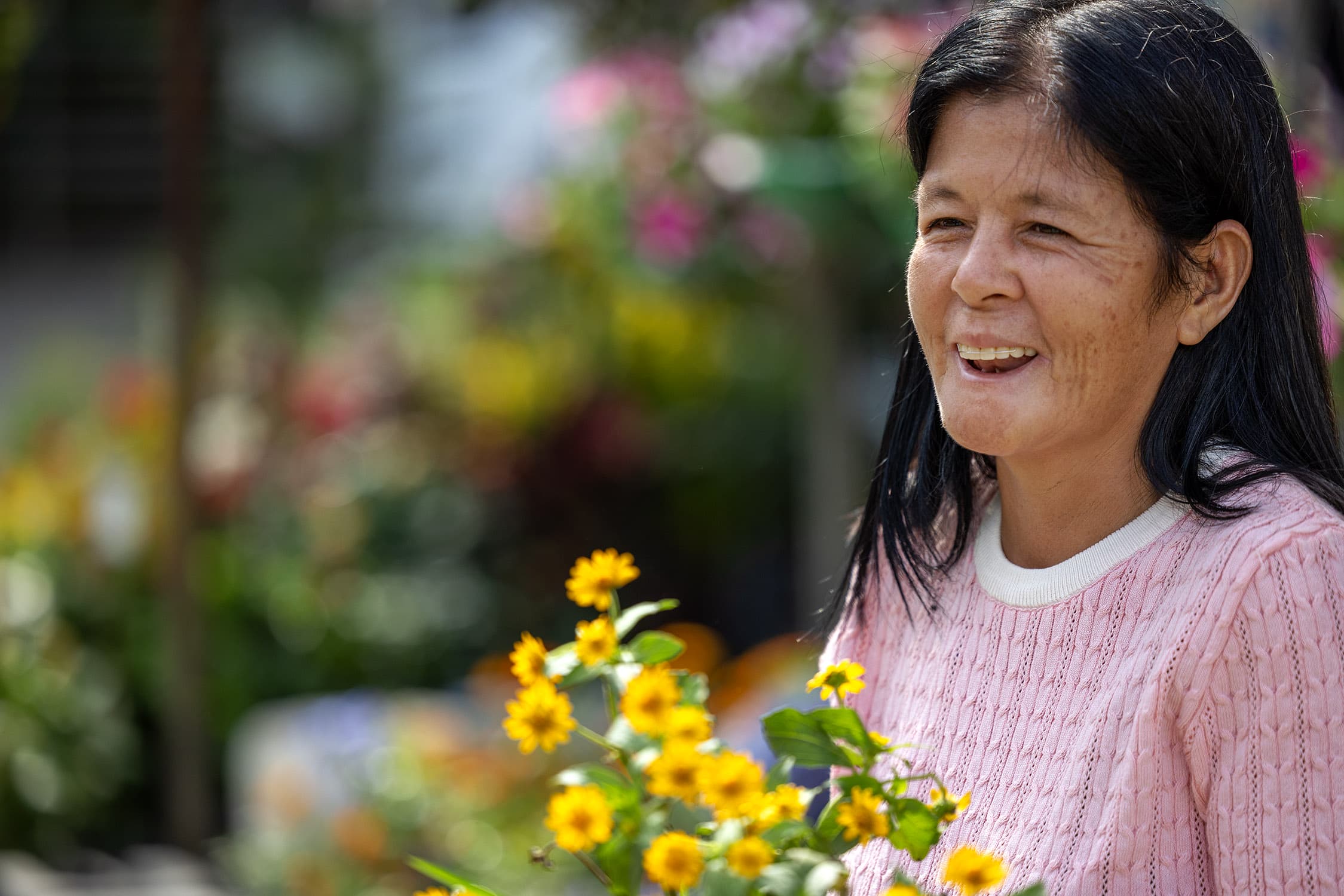
Airene Tarona left a stable career in accounting in search of something more self-directed. Long hours and the demands of office life left little time for her family or for anything she could call her own. “I didn’t feel like I owned my time,” she says.
With no formal background, she began building a small plant business at the Mahogany Market in Tagaytay. Her stall is filled with flowering plants, herbs and greenery, arranged with quiet care. What started as a personal interest has grown into a steady enterprise, now extending into landscaping work across Metro Manila.
Financing provided structure rather than scale. More flexible terms allowed her to align repayments with the rhythm of her business, giving her time to turn investment into income. Over multiple loan cycles, she has built both stability and confidence in how she operates.
Around her, other women run similar stalls, forming a quiet network of small businesses built through consistency and discipline.
“A business that you love becomes a part of you,” she says. “You take care of it.”
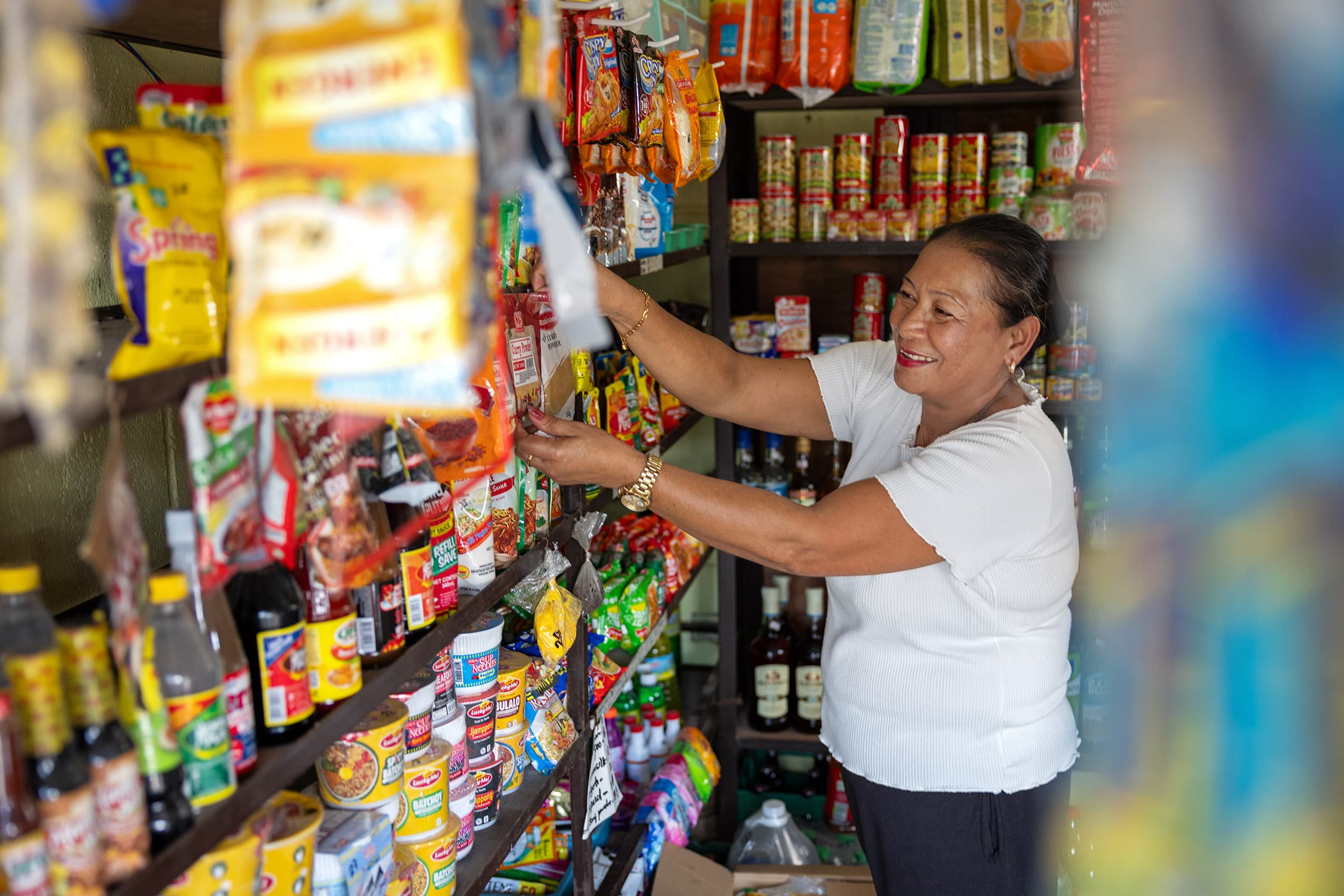
Melenciana Villela has spent her life building small businesses. From selling farm produce to running a sari-sari store, her work has always been shaped by the need to provide for her family and create stability over time.
“I just kept finding ways,” she says.
Her current business operates from her home, combining retail with a small karaoke rental service. The store is orderly and well-stocked, a steady flow of customers passing through the front of the house. What began as a modest setup has grown into a reliable source of income, supported by careful planning and consistent reinvestment.
That approach has extended across generations. Her children have established businesses of their own nearby, creating a line of family-run enterprises along the same street.
“If we know we have a loan to pay,” she says, “we prepare for it.”
TAKING FLIGHT — JUVY CASTILLO
(Paete, Laguna)
From Dust to Dream — Josephine Arit
(San Antonio, Laguna)
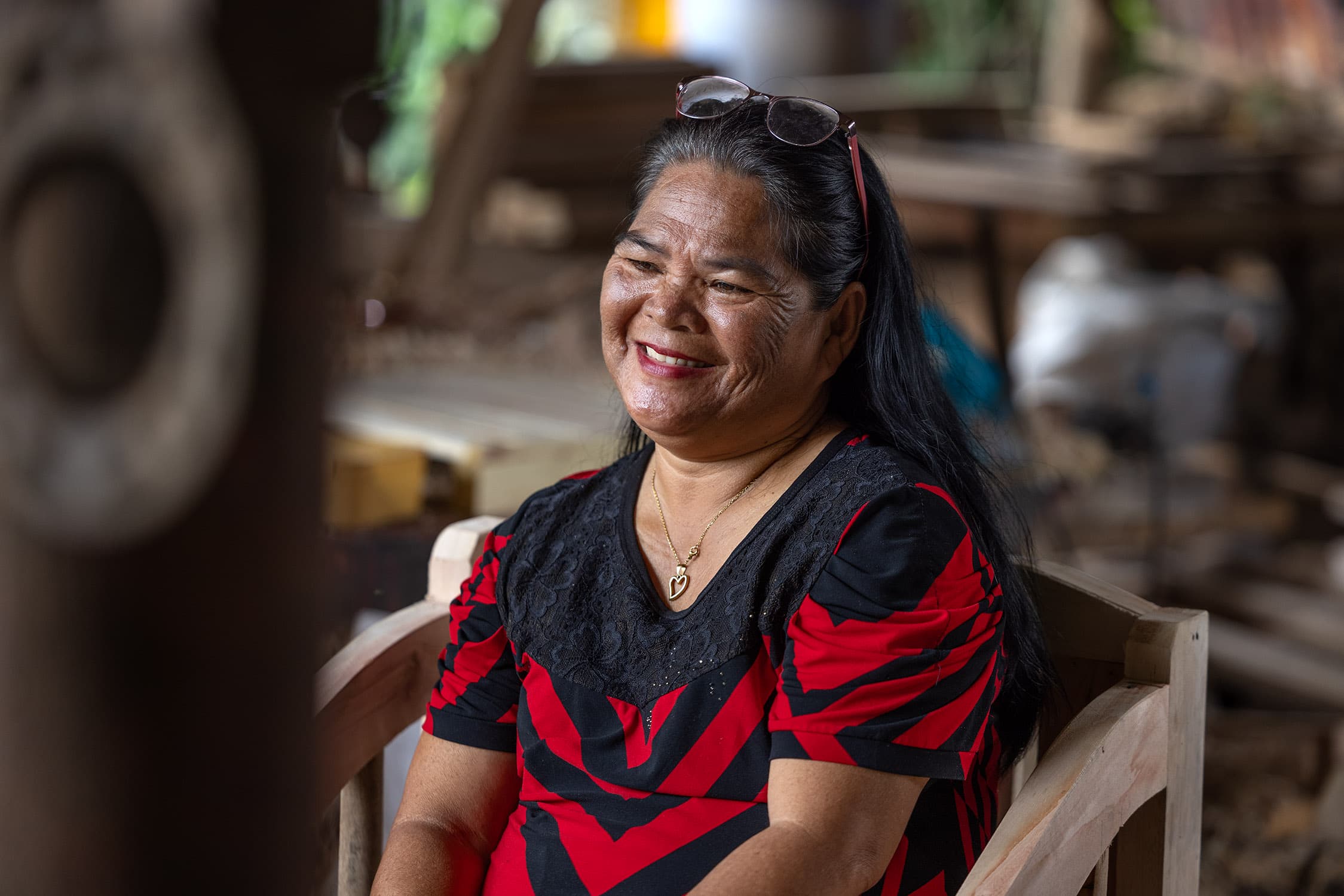
Josephine Arit’s business was built out of necessity. In the early years, she and her husband hauled timber themselves, dragging heavy logs through mud and river systems just to earn a living. “Life was hard. Very hard,” she recalls.
Rather than remain at the level of raw materials, she began producing pallets, boxes and eventually furniture, supplying nearby businesses. The shift marked the beginning of a more structured enterprise, shaped by persistence and a willingness to expand beyond immediate survival.
A turning point came when she secured a large order from a major tile manufacturer. Without the capital to fulfil it, she sought financing to purchase materials and scale production. That decision set the foundation for sustained growth.
Today, Josephine runs a workshop alive with movement — sawdust in the air, light cutting through the space — supplying both pallets and furniture across Laguna. Her operation includes a small fleet of delivery vehicles, and the land it stands on is now her own.
“If you want to succeed in life,” she says, “you must be wise with your money and invest back into your business.”
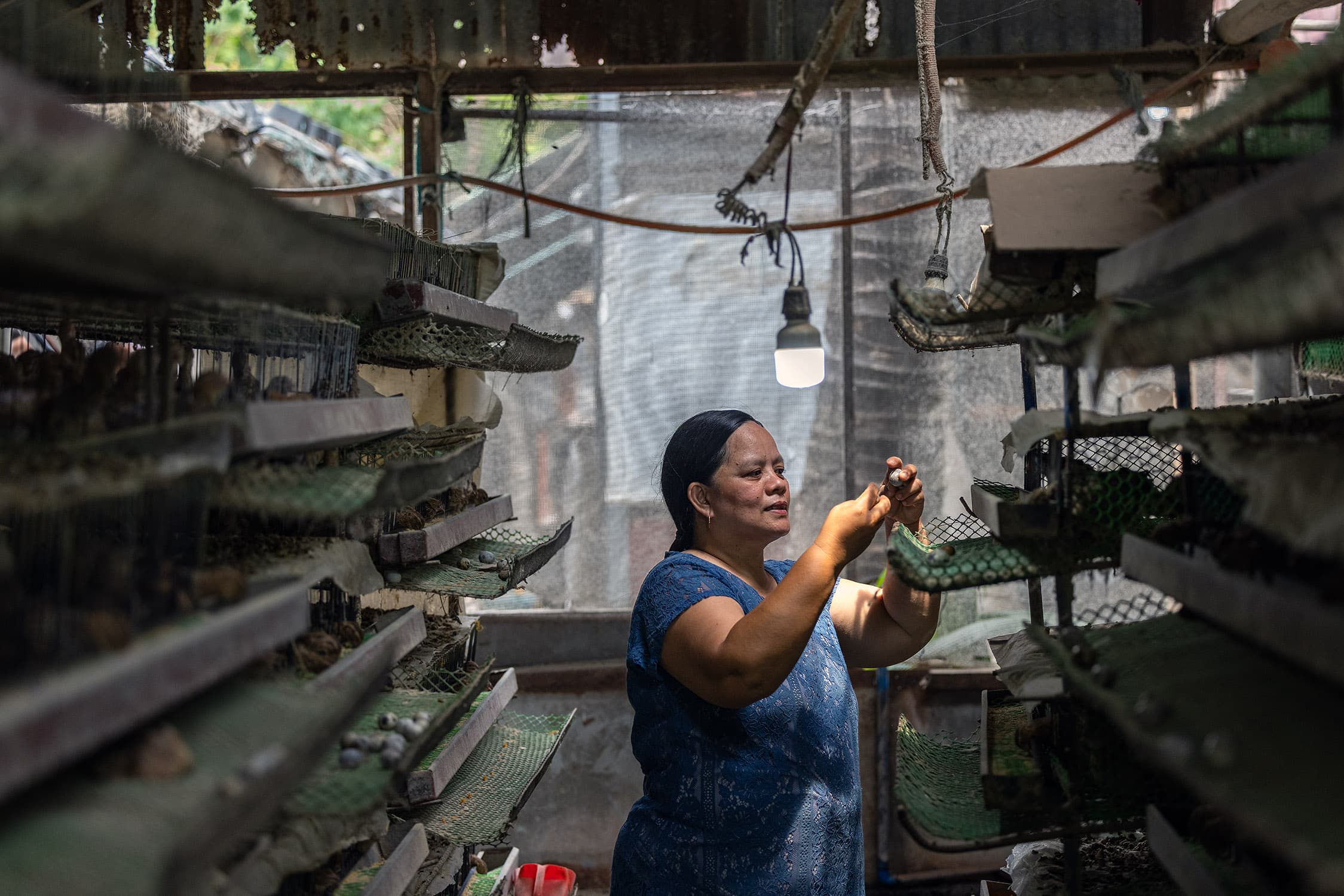
Juvy Castillo’s business emerged from a period of loss. After a failed venture in duck farming left her family struggling to meet basic needs, she began again with a small loan and a shift into quail egg production.
“It was really difficult,” she says. “But you have to keep going.”
Starting with a modest flock, she rebuilt steadily, growing her operation through careful management and reinvestment. Today, her farm supports over 30,000 quails, the constant hum of the birds filling the narrow pathways between the pens.
Her work is structured and consistent. Daily routines are shared with her husband and daughter, and responsibilities are passed on, ensuring continuity across generations. What began as recovery has developed into something stable and forward-looking.
“You have to keep getting up,” she says. “No matter how many times you fall.”